Compare
Ballie vs UWORLD U1
Quick verdict
UWORLD U1 leads on 7 of 10 comparable rows
Ballie leads on Mobility, Autonomy, and Home Navigation. UWORLD U1 leads on Readiness Score, Reality Score, Data Freshness, and Battery (+3 more).
Who should choose which?
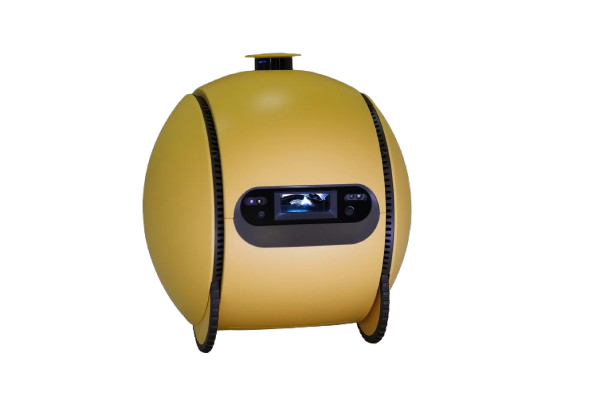
Choose Ballie if…
- You are tracking a prototype platform and do not need a buy box this year.
- Your main goal is home assistant, which Ballie targets directly.
- Strengths like home navigation and perception match how you plan to use it at home.
- You prefer a mobile form factor over the alternatives in this compare.

Choose UWORLD U1 if…
- You want higher readiness (83/100 vs peers) for near-term home use.
- Verified shipping and public proof matter more to you (reality score 72/100).
- You need a pre-order path today while alternatives are still prototype or coming soon.
- Your main goal is conversation, which UWORLD U1 targets directly.
- Strengths like social interaction and perception match how you plan to use it at home.
| Spec | Ballie  SamsungLeads 3 SamsungLeads 3 | UWORLD U1  UBTechLeads 7 UBTechLeads 7 |
|---|---|---|
| Performance | ||
| Readiness Score | 52 | 83 |
| Reality Score | 38 | 72 |
| Data Freshness | 98% | 100% |
| Speed | Unknown | Unknown |
| Payload | Unknown | Unknown |
| Specs | ||
| Height | 20 cm | 168–183 cm |
| Weight | Unknown | 35.2–42 kg |
| Battery | 2–3 h | 2–4 h |
| Form | Mobile | Humanoid |
| Availability | ||
| Price | Unknown | $17,600+ |
| Market Status | Prototype | Pre-order |
| Availability | Prototype | Limited |
| Countries | Unknown | China |
| Intelligence | ||
| Mobility | 74 | 40 |
| Manipulation | 8 | 42 |
| Perception | 78 | 82 |
| Autonomy | 70 | 62 |
| Social Interaction | 75 | 94 |
| Home Navigation | 82 | 38 |
| Sensors | Spatial LiDAR, front/rear cameras, IR transmitter, ambient light (inferred from demos) | Eye cameras, chest sensors, microphones, multimodal situational awareness |
| Connectivity | Wi-Fi, Samsung SmartThings | Wi-Fi |
| Ecosystem | Samsung SmartThings; Google Gemini; 1080p dual-lens projector; IR appliance control; Samsung mobile app (demos) | UWORLD consumer robotics brand; Emotion-aware large language model; Agent Memory OS; Local-first privacy architecture; Appearance customization and 3D face recreation options; JD.com presale channel in China |
Green cells mark the stronger value in each row across 2 robots.