Genesis AI unveils Eno, a wheeled general-purpose robot built to extend humans
The French startup backed by Eric Schmidt showed a foldable tower on wheels with human-like hands, targeting logistics first and home buyers later in 2026.
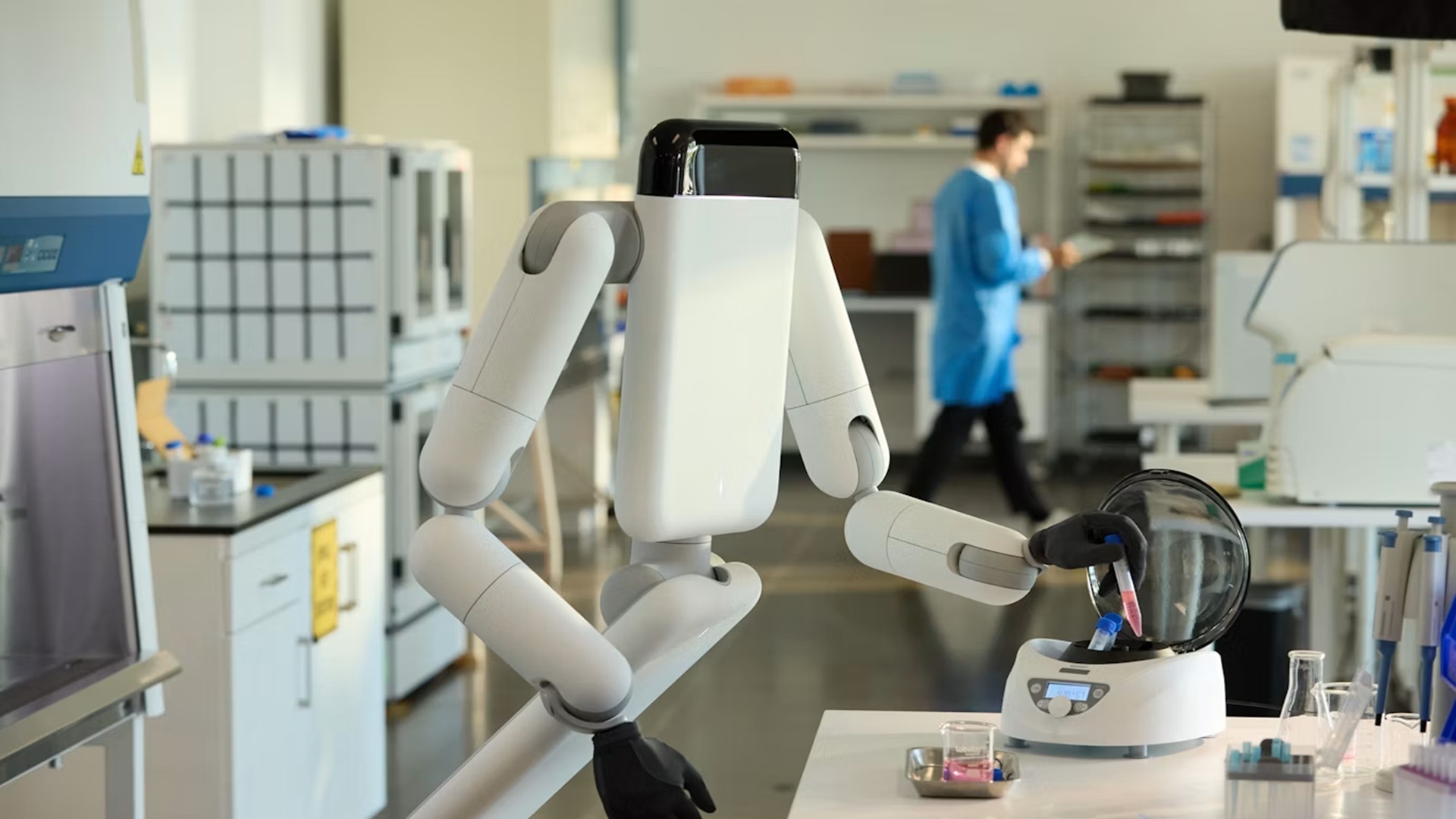
French robotics startup Genesis AI unveiled Eno on Tuesday, June 16, 2026 — its first general-purpose robot and a deliberate break from the humanoid wave. Instead of legs and a torso built to look like a person, Eno rolls on a wheeled base, rises on a foldable tower, and uses hands shaped like human hands for manipulation. The company runs its own AI model on board and says the goal is to extend human capabilities, not copy human form.
Former Google CEO Eric Schmidt backs Genesis AI. In a statement tied to the launch, he argued the robot will not replace human expertise but "amplify it" — framing Eno as tooling for a large economic shift as AI moves from chatbots into physical machines.
What Genesis AI reported
- Design: non-humanoid — wheels, foldable vertical body, anthropomorphic hands
- Philosophy: mimic human capabilities, not human appearance; height changes through the foldable tower instead of walking legs
- Funding: about $105 million (€90.6 million) raised since founding in early 2025, among France's largest seed rounds on record
- Units built: dozens so far; production scale-up planned for the second half of 2026
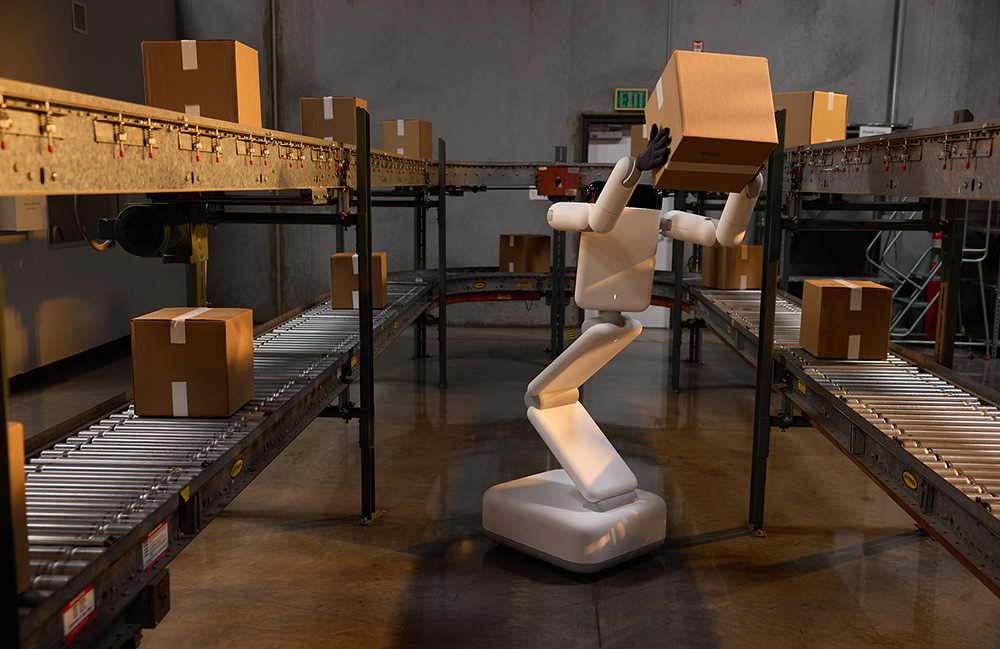
- First deployments: targeted customer pilots by end of 2026, starting with logistics and manufacturing
- Later segments: hotels, hospitals, then consumers
Vivian Sun, Genesis AI's VP of Commercial and Strategy, told Reuters the wheeled base fits how most industrial floors are laid out today. Legs, she said, only make sense when the job includes stairs — a rare requirement in warehouses and factories. "We are mimicking humans in capabilities, not in form," she added. "Humans can go up and down, and so does the robot, but through this foldable design."
Context for home robot watchers
The global robotics market is heating up as foundation models improve manipulation and planning, but battery life and on-device compute remain open problems for mobile machines. A Reuters/Ipsos poll cited in coverage this month found 53% of Americans worried AI could put them or someone in their household out of work — a reminder that every new general-purpose robot launch lands in a skeptical labor market, even when vendors pitch augmentation over replacement.
For readers tracking home robots on HomeBotRadar, the consumer line in Genesis AI's roadmap is real but last in sequence. Hotels and hospitals sit ahead of living rooms, and we have no public MSRP, no confirmed home specs, and no preorder page yet.
What we do not know yet
Press materials do not list height range, weight, battery runtime, payload, or price bands for Eno. Genesis AI's valuation was not disclosed in the France 24 / Reuters coverage. Treat Tuesday's event as a product reveal and go-to-market plan, not a spec sheet you can compare row-for-row with G1 or Figure 02.
What this means for HomeBotRadar
Eno is not joining the HomeBotRadar catalog today. We list home and companion robots with scores, specs, and buy paths we can verify. Eno is a general-purpose industrial-to-consumer platform still in early build counts, with consumer timing explicitly downstream.
The indirect signal is still worth watching: a well-funded European team is betting that wheels plus folding reach beat humanoid legs for most flat-floor work — and that human-like hands matter more than human-like silhouettes. If Genesis AI later publishes home-oriented pricing, dimensions, and a consumer ship window, we will evaluate whether Eno belongs in the database.
We are not updating any robot scores on this story alone.

Covers product launches, demos, and week-to-week moves in the home robot market.
Comments
No comments yet
Be the first to share a question or hands-on note.