Basel's cork-sized MIR dental robot mounts on your teeth to drill crown prep in one visit
University of Basel researchers built MIR, a Miniature Intraoral Robot that clips to a custom dental splint and drills crown prep from inside the mouth. CNET's July coverage highlights lab tests on ceramic models, not patients.
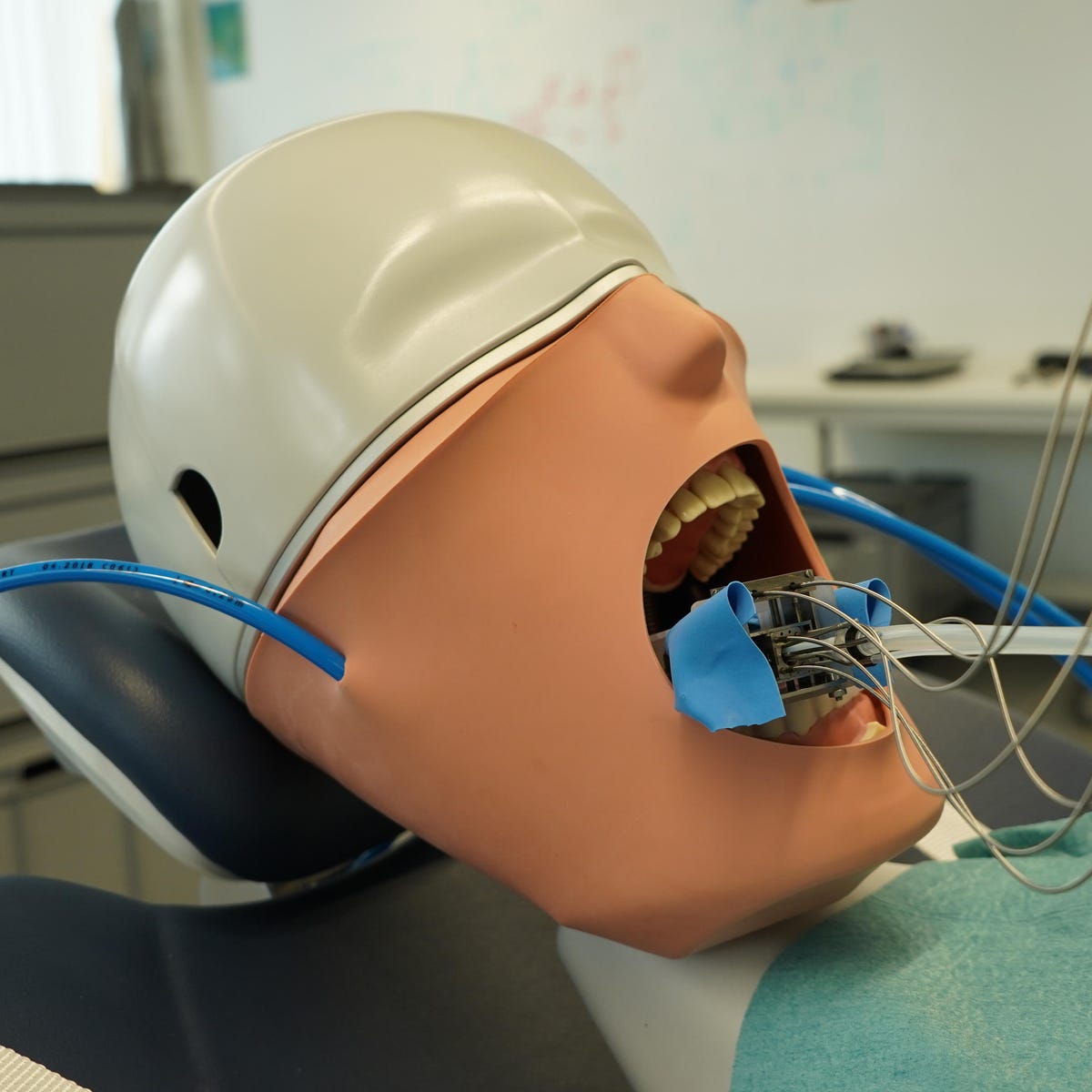
CNET picked up a Swiss research prototype that sounds like science fiction until you see the splint. Researchers at the University of Basel built MIR, short for Miniature Intraoral Robot, a device about the size of a wine cork that mounts inside an open mouth and drills a tooth for a crown while moving with the patient's head.
The pitch is fewer dentist visits. Today's crown workflow often spans multiple appointments: decay removal, temporary crown, impression, then a return trip for the permanent cap. MIR is meant to follow a digital plan from a single scan, prepare the tooth automatically, and let the clinic order the final crown right away instead of waiting for a second prep session.
How MIR stays put when you move
The clever part is mechanical, not AI magic. After an intraoral scan, the team fabricates a patient-specific dental splint and bolts MIR onto it. Because the splint is anchored to the teeth, the robot rides along if you turn your head or shift in the chair. Motors and control hardware stay outside the mouth, with flexible drive shafts, cables, and tubes feeding power to the tiny body.
Lead author Dr. Yukiko Tomooka told University of Basel the package measures about 43 by 26 by 28 millimeters, small enough to sit comfortably with the mouth open. Research group leader Prof. Georg Rauter frames the next milestone as onboard sensing: cameras and position feedback so MIR could resume mid-job even after a power cut, using stored sensor data rather than guessing where the bur left off.
Two drills, sub-millimeter error on models
MIR works in two milling steps drawn from a CAD plan:
- Occlusal reduction: a wider bur removes material from the top of the tooth
- Axial reduction: a longer, thinner bur works the sides
So far the team has tested on synthetic resin tooth models and ceramic samples matched to enamel hardness, not living patients. Even without direct position sensors, reported positional error stayed below 0.2 millimeters. Drilling forces measured under five newtons, roughly the weight of a half-liter water bottle. The group is also studying noise levels to judge whether the rig could be tolerable in a real clinic.
The work appears in IEEE Transactions on Medical Robotics and Bionics (2026) as Miniature Intraoral Robot (MIR) for Minimally Invasive Tooth Preparation. Funding came from Innosuisse, with partners including the University of Zurich Center for Dental Medicine, Camlog Biotechnologies, and the University of Bern neuro-robotics group.
What we do not know yet
There is no clinical trial, no regulatory clearance, and no dentist you can book for a MIR crown prep today. CNET's walkthrough shows the concept on models and splints, which is useful for understanding the mechanism but not proof of safe human use. Open questions include sterilization workflows, splint comfort over long jobs, how the system handles bleeding or saliva, and whether single-visit CAD/CAM crowns fit every case dentists currently spread across two visits.
Researchers also still need to shrink or integrate sensors without growing the intraoral package. Until independent clinicians publish outcomes on real teeth, treat MIR as a promising lab result, not a product launch.
What this means for HomeBotRadar
MIR is not joining the HomeBotRadar catalog. This is chairside medical hardware for restorative dentistry, not a home or companion robot. We cover stories like this when mainstream tech press surfaces interesting manipulation rigs, because the same precision, sensing, and "robot moves with the human" problems show up in domestic arms and assistive devices.
If you are shopping for robots that actually live in your house, start with platforms we track for daily tasks and companionship. Our news hub and robot catalog stay focused on home-relevant hardware with specs and scores you can compare.

Covers product launches, demos, and week-to-week moves in the home robot market.
Be the first to share a question or hands-on note.