UNIST team teaches social robots to read touch and dial up emotional reactions
A UNIST design lab unveiled touch-reading and five-level emotional expression software on its Remy prototype at ICRA 2026, aiming for more natural care and companion robot interactions.
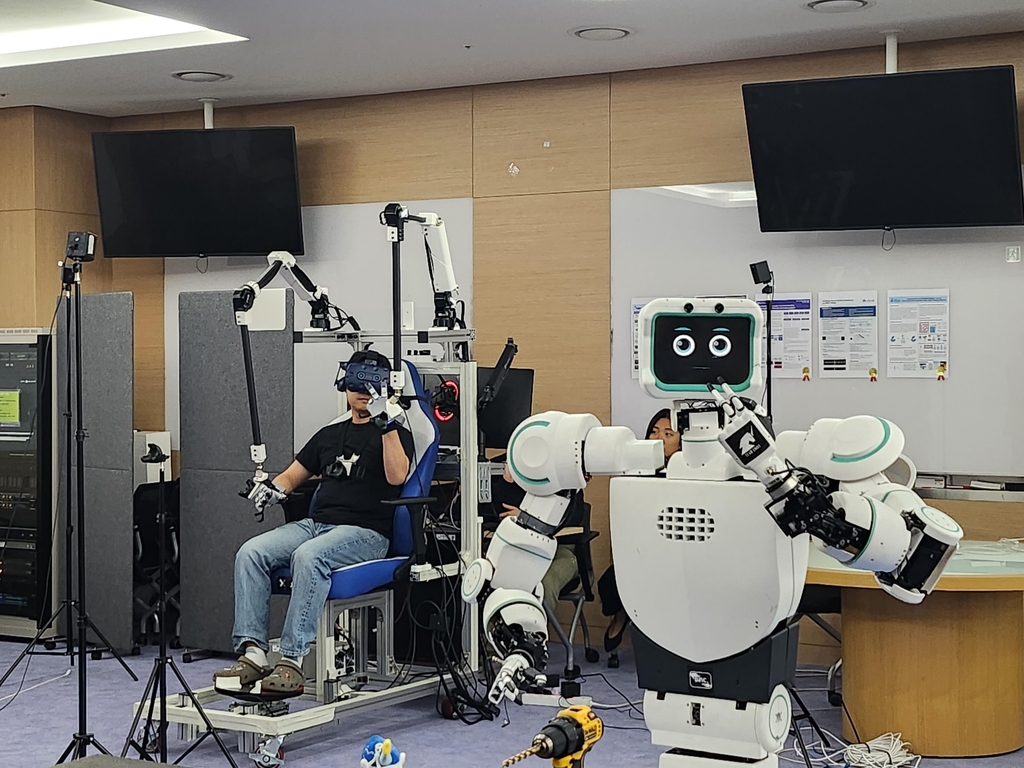
Researchers at Ulsan National Institute of Science and Technology (UNIST) say they have given social robots a sharper sense of human touch and more nuanced emotional reactions, work they presented at IEEE ICRA 2026 in Vienna from June 1 to 5, according to DongA Science. The team, led by Professor Hee-seung Lee of the Department of Design, is not shipping a consumer product. It is publishing perception and expression methods that could eventually reach care robots, educational robots, and companion robots that live beside people at home or in clinics.
The lab demonstrated the stack on Remy, a research platform built to both recognize touch intent and express emotion through face, motion, and sound. Lead author Jisu Kim told DongA Science that earlier companion-dog prototypes struggled when hand size and pressure varied between users. The new touch pipeline reads rhythm and vibration patterns from a capacitive touch sensor, borrowing the same idea speech recognition uses to pull stable frequency features out of words. Kim said the approach can distinguish different touches without complex tactile arrays.
Five levels of emotional exaggeration
Expression was the second half of the story. Many social robots move with a flat intensity when they play happy, sad, or surprised, which reads as mechanical on a living-room scale. The UNIST group tuned the damping ratio inside Remy's emotional dynamics model, controlling how much movement overshoots its target. They set five levels of exaggeration: lower damping yields bigger face motion, body motion, and audio responses; higher damping keeps reactions restrained.
Surprise and other high-arousal states run hot. Calmer emotions stay moderate. Dr. Haeun Park and Kim co-authored the ICRA presentation alongside Lee, who told DongA Science that social robots need both touch understanding and situation-appropriate expression if they are to feel vivid rather than scripted.

Why home robot watchers should care
Touch is central to products shoppers already compare on HomeBotRadar. LOVOT and aibo lean on petting and proximity cues. ElliQ and Jennie target elder-care companionship where gentle contact matters. Misa and Vector 2.0 stay more screen-and-voice forward, but the industry keeps pushing haptics and affective motion as differentiators. UNIST's work is lab-stage software, not a firmware update you can buy tomorrow, yet it points at a shared bottleneck: robots that treat every stroke the same will keep feeling stiff next to animals or humans.
What we do not know yet
DongA Science does not name a commercial partner, open-source release, or peer-reviewed paper title in the English summary. We do not have independent benchmark scores against LOVOT-class touch stacks, latency numbers on Remy, or a timeline for licensing into shipping hardware. ICRA is a research venue, not a product launch.
Treat Remy as interaction research with clear home-adjacent use cases. If UNIST or a spinout pairs the touch and emotion engines with a named companion robot, confirmed specs, and a buy path, that hardware story would be separate from this conference paper.

Tracks robot specs, readiness scores, and field confirmations for HomeBotRadar.
Be the first to share a question or hands-on note.