Agility Robotics targets public listing as CEO pegs home humanoids 10+ years out
Agility's $2.5B SPAC deal would make Digit the first pure-play humanoid stock, but Peggy Johnson says living rooms stay a decade away.
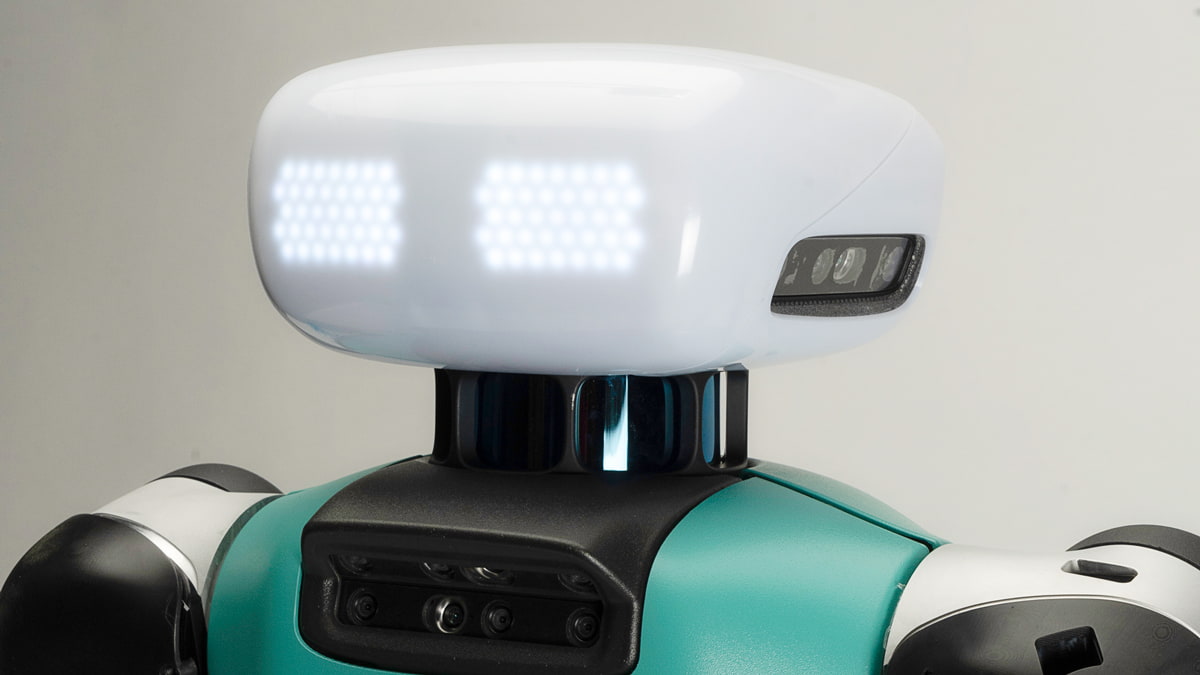
Agility Robotics is planning to go public through a merger with Churchill Capital Corp XI, a SPAC led by Michael Klein. The deal values the Salem, Oregon humanoid maker at about $2.5 billion and targets more than $620 million in gross proceeds, per TechCrunch's July 5 interview with CEO Peggy Johnson. The transaction still needs shareholder approval and SEC review and is expected to close later in 2026.
If it closes, Agility would be the first pure-play humanoid robotics company on US public markets. That matters for HomeBotRadar readers because it would also open one of the few audited financial windows in a category where most rivals keep unit counts and bill-of-materials private.
What Agility reported on Digit
Johnson declined to share forward financial guidance or Digit's bill of materials with TechCrunch. She did confirm the hardware profile the company has deployed in live facilities:
- Height: about 5 ft 9 in (175 cm)
- Weight: about 160 lb (73 kg)
- Task focus: moving heavy totes and cases in human-built warehouse aisles
- Hands: two thumbs and two fingers, tuned for plastic totes even when contents shift
- Legs: reverse-bend knees so Digit can reach floor to overhead shelving without hitting racking
On software, Johnson said Agility is LLM-agnostic, pulling models including Claude and Gemini for what she called the semantic layer: turning plain-language instructions into robot behavior. Engineers recently told Digit to "clean up this mess" after scattering mixed trash on a floor; the unit sorted and binned items correctly, including bubble wrap as non-recyclable. Johnson still framed balance, locomotion, and manipulation as Agility's core edge, built from more than a decade of real deployments rather than lab demos.
Commercial numbers vs home timeline
The pipeline Johnson described is industrial, not residential:
- $300 million+ in booked multi-year revenue tied to roughly 1,000 robots
- Robots-as-a-service monthly fees rather than outright purchase for many customers
- Named deployments with GXO Logistics, Amazon, Toyota Motor Manufacturing Canada, Schaeffler, and Mercado Libre
- A 70,000 sq ft manufacturing site in Salem to ramp production against that order book
Johnson told TechCrunch that every customer on Agility's list is already vetted and has deployment plans beyond proof-of-concept pilots. She also emphasized industrial safety certification across electrical systems, hardware, and software as a gulf between Agility and competitors that mostly show choreographed videos.
On homes, she was direct: expect 10-plus years before humanoids handle breakfast-in-bed chores. Warehouses and factories have fixed aisles and predictable workflows. Homes add pets, visitors, clutter, and objects in unpredictable places. Johnson compared the gap to autonomous driving: roads have more discipline than most spaces humanoids will enter.
Agility is not ruling out consumer use eventually. For now, the company says it is focused on unfilled physically demanding warehouse and factory roles, citing more than one million open US jobs in those categories.
Next hardware: Digit v5
Trade coverage ahead of the SPAC news points to a Digit v5 launch with specs Agility has previewed but not fully verified in our catalog workflow:
- Payload: up to 50 lb (22.7 kg), a stated 40% gain over v4
- Runtime: about 22 hours on a charge
- Reach: up to 7.2 ft (2.1 m)
- Safety: cooperative operation alongside humans without physical barriers, with NVIDIA IGX Thor and Halos in the v5 safety stack
The Robot Report also cites a $125,000 bill of materials for Digit v4 from Agility's CFO. That is enterprise pricing context, not a home MSRP.
What this means for HomeBotRadar
Digit is not joining the HomeBotRadar catalog. Agility builds a warehouse and factory humanoid sold or rented to enterprises. We track home and companion robots with buyer-facing specs and scores we can verify. Digit's public numbers are useful background for Figure 02, Unitree G1, and other humanoids we score, but they do not create a living-room SKU.
We are not updating any robot scores on this SPAC filing alone. Johnson's 10-plus-year home timeline aligns with analyst wave models that put consumer humanoids after 2030. The actionable signal for 2026 shoppers is the opposite lane: companions, pets, and desk bots you can order today, while industrial humanoids scale on monthly service contracts.
We will revisit readiness and reality on catalog humanoids when vendors publish verifiable home specs, consumer pricing, and ship windows, not when a warehouse-first maker files to go public.

Tracks robot specs, readiness scores, and field confirmations for HomeBotRadar.
Be the first to share a question or hands-on note.