 Unitree
China pushes back after the FCC blocks foreign humanoid and robot-dog imports
Beijing calls the FCC Covered List move suppression after Washington blocks new foreign-made humanoid and quadruped robots on national security grounds.
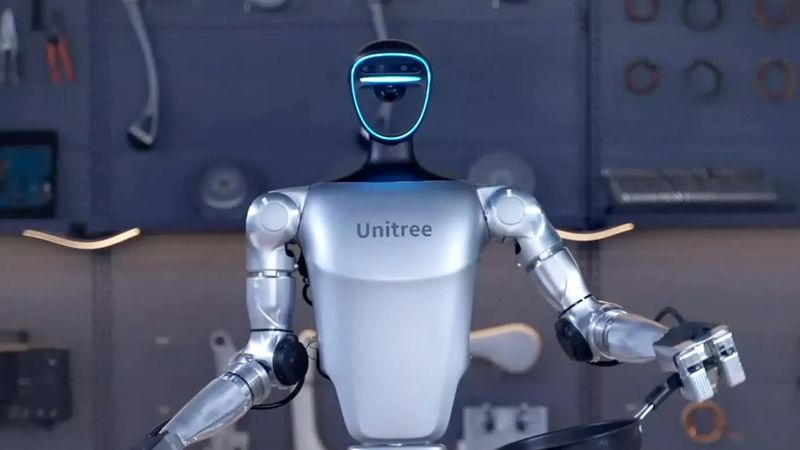
China accused the United States of trying to suppress Chinese robotics firms after Washington put foreign-made humanoid and quadruped robots on the FCC Covered List. Hong Kong Free Press carried the AFP report on July 30, 2026. We are filing it the same day for readers watching US buy paths on Chinese platforms.
The FCC update landed July 28. It adds foreign-produced advanced robotic devices to the same security list that already covers certain drones and companies such as Huawei. New foreign-made models that walk on two or four legs face a block on fresh FCC equipment authorization, unless they win a Conditional Approval from the Department of War. Models the FCC already authorized, and robots already in US buyers' hands, stay put.
What Beijing said
Foreign ministry spokesperson Mao Ning said China firmly opposed the move and argued Washington is overstretching national security to hit Chinese companies. Beijing said it will take necessary measures to protect Chinese firms' interests, and warned that protectionism will not boost US competitiveness. It will hurt American companies and consumers instead.
That framing matters because most humanoids sold into the US today are imported, with China supplying a large share. AFP notes robots already fill hotels, malls, and factories across China, while US deployments are still mostly industrial spaces such as auto plants and warehouses.
What the rule actually covers
The robotics entry targets mobile platforms that mimic human or animal walking: humanoids, robot dogs, and related ground robots that meet the FCC's connectivity tests. Stationary industrial arms, many medical robots, and drones under separate rules sit outside this bucket. Foreign-owned brands that build in the United States can also stay clear. That is why Spot from Boston Dynamics is a different story from a China-built biped seeking a first-time US authorization.
Security agencies argue connected foreign robots can collect data, open cybersecurity holes, or threaten critical infrastructure. Press coverage has pointed to prior Unitree research flaws as one example of that narrative. The list is forward-looking: new models need approval; old authorized SKUs can still ship.
What this means for HomeBotRadar
This is a policy and availability story, not a new catalog row. We are not changing prices or readiness scores on a headline alone. Pain points land on Chinese humanoids already in our database, including Unitree G1, Atom, CASBOT 01, Kuavo 5, PM01, and UWORLD U1. US-leaning paths such as Figure 02, Optimus Gen 2, and NEO Gamma sit on the other side of the supply-chain fence for now.
If you were eyeing a China-made biped for a US home or lab buy, treat new model arrivals as blocked until a vendor publishes Conditional Approval or a US build plan. Units already authorized or already owned keep their path. Open Unitree G1 and Figure 02 on Compare, then verify FCC and vendor channel notes before you treat any third-party quote as shippable.
View Unitree G1
Covers product launches, demos, and week-to-week moves in the home robot market.
Be the first to share a question or hands-on note.