 Unitree
UC San Diego teleoperated Surgie robots complete first live animal surgeries on Unitree G1
UC San Diego's Surgie humanoids, built on Unitree G1, finished two preclinical gallbladder removals under remote surgeon control, detailed in Nature on July 8.
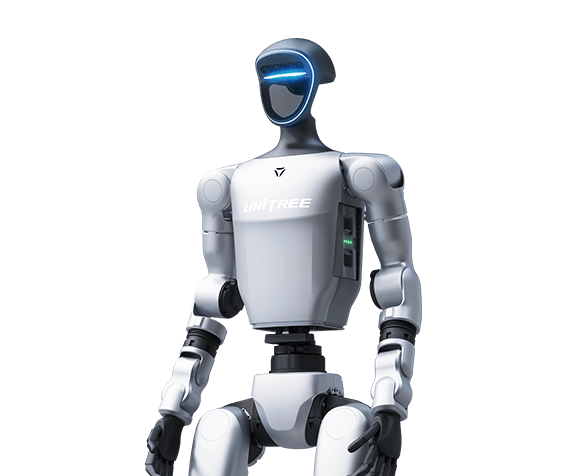
UC San Diego engineers and surgeons used teleoperated humanoid robots nicknamed Surgie to finish two live gallbladder removals in a preclinical trial. The work appears in the July 8, 2026 issue of Nature, and UC San Diego Today has the clearest public write-up. The robots are built on the Unitree G1 platform: general-purpose bipeds holding standard laparoscopic tools through custom adapters, not a hospital-only surgical chassis.
This is a lab and OR milestone, not a home product story. Still, it is one of the sharpest real-world tests yet of a catalog humanoid's arms, teleop stack, and force control outside warehouse demos.
What the team did
In the first procedure, one Surgie unit worked with a human surgeon as assistant. In the second, two Surgie robots operated side by side with no human scrubbed in at the table. Both cases used large non-primate mammals. Surgeons drove the robots from a console with stereo vision and a foot pedal to engage or drop tool control, per reporting from Ars Technica.
UCSD puts Surgie at about 5 ft (1.5 m) tall and 60 lb (27 kg). That footprint is a fraction of dedicated systems that can weigh around 1,800 lb and force OR redesign. The pitch is mobility and access: remote clinics, understaffed theaters, disaster or field medicine, not matching da Vinci throughput on day one.
Senior authors include engineer Michael Yip and surgeons Shanglei Liu and Ryan Broderick. Liu says the humanoid teleop felt as precise as teleoperated specialty systems in these tests, while costing and packing less. Resident Nikita Thareja noted how well Surgie fit existing workspace and workflow once tool adapters were in place.
Limits that matter
The procedures needed mid-case recalibration and took longer than specialty robotic platforms. Latency between console motion and robot motion is still a focus as the team experiments with longer-distance teleop. UCSD is clear this is preclinical proof of concept, not a path to human patients tomorrow.
Longer term, Yip talks about an "autonomous surgical assistant" that can fetch tools, tidy the room, and work beside humans, not replace the scrub team overnight. Project materials are linked from the Humanoid Surgeon project page.
What this means for HomeBotRadar
We are not adding Surgie as a separate catalog robot. Scores and buyer data still sit on stock Unitree G1. No home readiness or reality score change from a surgical teleop paper.
The takeaway for buyers watching G1 is credibility of the platform under high-stakes dexterous teleop, with adapters and custom software. Living-room chores and hospital laparoscopy are different problems. Compare Unitree G1 with NEO Gamma and Figure 02 if you are tracking which humanoids have the strongest manipulation narrative for homes versus labs.
View Unitree G1
Covers product launches, demos, and week-to-week moves in the home robot market.
Be the first to share a question or hands-on note.